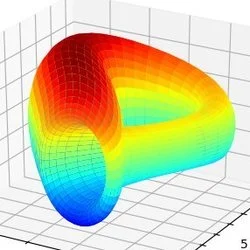

Curve.fi FRAX/USDC (CRVFRAX): project purpose, mechanism and token context
The review below maps the available evidence for Curve.fi FRAX/USDC across project scope, mechanism, token role and operational status. Fast-changing market, supply and contract details are kept outside the factual record unless a dated source supports them. Statements remain attributed to their supporting record, and an unresolved field is left open instead of being completed from a generic project pattern.
What the project record establishes
The reviewed record describes Curve.fi FRAX/USDC in these terms: Official Frax docs describe Curve liquidity as a mechanism for FRAX/USDC liquidity, peg support and trading revenue. This establishes a documented purpose, but it does not establish current adoption, reserves, market value or future results. This boundary keeps the stated project purpose separate from observations that need market, legal or onchain evidence.
The available material adds the following mechanism detail: Curve governance documentation describes FRAX-related stablecoin pool migration and liquidity context. This describes intended operation; it does not prove that every feature or integration is live today. A current interface check is still necessary because documentation can outlive the implementation it originally described.
How the stated mechanism operates
Another documented element is: The listing should be treated as a pool position pending exact contract confirmation. This provides functional context, but it is not evidence of guaranteed liquidity, returns, collateral quality or enforceable holder rights. Economic rights, if any, depend on the actual contract and governing terms rather than on a general product description.
One fact is especially important for distinguishing versions of the asset: The FRAX/USDC Curve position provides stablecoin liquidity and supports FRAX trading and peg-management operations; it is not a standalone layer-1 or general-purpose token project. Similar names and historical deployments can coexist, so chain and contract checks remain necessary. This identity check is especially important for bridged, wrapped, migrated or reissued assets.
Role of the token
The available evidence supports this token-related point: Liquidity providers deposit FRAX and USDC into a Curve StableSwap pool and receive a pool position. Curve's stable-swap invariant is designed for low-slippage swaps between similarly priced assets; Frax documentation describes using Curve liquidity for peg support and fee revenue. It does not justify filling gaps in allocation, issuance, vesting, redemption or burn mechanics. Token economics can change through governance, migrations or revised disclosures, so old parameters are not silently carried forward.
The source material further notes: Documented token utility: represent a liquidity-provider position in the relevant pool; enable FRAX/USDC swaps and liquidity; allow LPs to earn trading fees and any configured incentives; serve Frax AMO and liquidity-management strategies where applicable. This is useful technical context, but permissions, counterparties, oracles, bridges, custody and withdrawal conditions still require operational review. The profile keeps those operational questions visible instead of treating the source description as a complete risk review.
Current identity checks
The sources also establish this limited fact: Documented tokenomics: pool shares are elastic and depend on deposits/withdrawals; no issuer allocation; liquidity is supplied by LPs and/or protocol-owned liquidity; pool fees and external gauge incentives are configuration-dependent; Verify exact pool address, chain, current reserves, TVL, APR and whether the listing maps to a current LP token or an older pool.. Nothing in that statement guarantees adoption, performance or a particular market result. Where external confirmation is absent, the wording remains explicitly tied to the reviewed source record.
Current status depends on what can be confirmed at the time of use. The dossier supports this point: Official Frax docs describe Curve liquidity as a mechanism for FRAX/USDC liquidity, peg support and trading revenue. If later official records change contracts, terms or deployments, the newer record takes precedence. A newer primary source should be used when it conflicts with this dated evidence or identifies a replacement deployment.
Risks, gaps and verification needs
The available documentation supports a description of intended scope, not a complete current-state audit. It records: Curve governance documentation describes FRAX-related stablecoin pool migration and liquidity context. Live market metrics and operational availability are evaluated separately. The page can still provide a useful identity record without inventing a missing metric or operational status.
For the last evidence item, the sources state: The listing should be treated as a pool position pending exact contract confirmation. The practical next step is a current check of chain, contract, official interface and material dependencies. That verification should occur before a transfer, approval, deposit or other irreversible interaction.
Key takeaways
- Official Frax docs describe Curve liquidity as a mechanism for FRAX/USDC liquidity, peg support and trading revenue.
- Curve governance documentation describes FRAX-related stablecoin pool migration and liquidity context.
- The listing should be treated as a pool position pending exact contract confirmation.
- The FRAX/USDC Curve position provides stablecoin liquidity and supports FRAX trading and peg-management operations; it is not a standalone layer-1 or general-purpose token project.
- Liquidity providers deposit FRAX and USDC into a Curve StableSwap pool and receive a pool position. Curve's stable-swap invariant is designed for low-slippage swaps between similarly priced assets; Frax documentation describes using Curve liquidity for peg support and fee revenue.
YearBull Rank overview
YearBull Rank data is not available at the moment for curve-fi-frax-usdc.
Rank movement (nearest daily data).
Reading rule: rank #120 sits higher than rank #200.
- 7d window: current rank not available.
- 30d window: current rank not available.
YearBull Rank is a relative ranking on YearBull designed to compare coins on a common scale and time window. A smaller rank number indicates a stronger position at that moment.
Route context: If rank moves sharply, it may reflect venue mix changes rather than fundamentals.
Risk view: If the last month is chaotic, widen the lookback before concluding.
Cycle angle: Compare the 30d move with the 7d move to see if momentum is accelerating or fading.
Liquidity view: If the line flatlines, the coin may be moving with its liquidity peers.