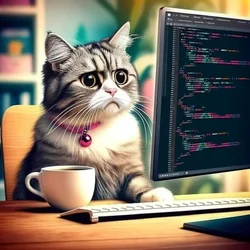

Happy Cat (HAPPY): project purpose, mechanism and token context
This source-bound review separates what the available documents say about Happy Cat from information that remains unverified. The distinction is especially important for contracts, live integrations, supply data and present availability. Statements remain attributed to their supporting record, and an unresolved field is left open instead of being completed from a generic project pattern.
Project scope and source record
For the project-level scope, the available sources state: The official site describes HAPPY as a community coin for the original Happy Cat meme. That evidence helps define Happy Cat, while leaving price, adoption and present operating scale outside the conclusion. This boundary keeps the stated project purpose separate from observations that need market, legal or onchain evidence.
For the practical design of Happy Cat, the record says: The project is presented as a fan/community token rather than a documented DeFi protocol. Readers should distinguish this documented design from current contract state, interface behavior and market conditions. The distinction matters when a protocol has changed versions, networks, service providers or access conditions.
Documented system design
The sources describe an additional part of the design: HAPPY is a community meme coin inspired by the viral Happy Cat meme and positioned as a fan/community project. The point is informative about mechanism, not a promise of financial outcome or uninterrupted availability. The article therefore avoids converting technical purpose into a claim about yield, ownership, redemption or legal entitlement.
The reviewed sources add this identity-relevant detail: The token relies primarily on community ownership, meme culture and open-market trading rather than a documented protocol or product; the project presents tokenomics and community links on its official pages. Before using Happy Cat, compare the current official interface and contract rather than relying on the name or ticker alone. A matching name is not enough when different contracts or representations can trade under similar labels.
Token role and economic claims
The available evidence supports this token-related point: Documented token utility: Community participation and meme-culture identity; No independently verified functional utility beyond the token/community role. It does not justify filling gaps in allocation, issuance, vesting, redemption or burn mechanics. Supply and allocation statements are treated as dated disclosures rather than permanent properties of the asset.
The source material further notes: Official pages document the community/fan-project positioning and tokenomics section. This is useful technical context, but permissions, counterparties, oracles, bridges, custody and withdrawal conditions still require operational review. Each dependency can change the practical risk even when the high-level project description remains the same.
Operational status and identity
The sources also establish this limited fact: Official site characterizes the project as a community fan project; individual founders were not confirmed. Nothing in that statement guarantees adoption, performance or a particular market result. Project-reported milestones and capabilities remain attributed to the project unless independent evidence confirms them.
For a present-day check, the relevant supported fact is: The official site describes HAPPY as a community coin for the original Happy Cat meme. Readers should defer to a newer authoritative record if Happy Cat has changed its deployment or terms. Historical documentation remains useful context, but it is not automatically evidence of the current operating state.
Unresolved details and practical checks
The available documentation supports a description of intended scope, not a complete current-state audit. It records: The project is presented as a fan/community token rather than a documented DeFi protocol. Live market metrics and operational availability are evaluated separately. Explicit gaps tell readers which checks remain necessary and keep the sourced facts distinct from assumptions.
For the last evidence item, the sources state: HAPPY is a community meme coin inspired by the viral Happy Cat meme and positioned as a fan/community project. The practical next step is a current check of chain, contract, official interface and material dependencies. The exact checks depend on the asset, but a current primary source and full contract comparison are the minimum identity controls.
Key takeaways
- The official site describes HAPPY as a community coin for the original Happy Cat meme.
- The project is presented as a fan/community token rather than a documented DeFi protocol.
- HAPPY is a community meme coin inspired by the viral Happy Cat meme and positioned as a fan/community project.
- The token relies primarily on community ownership, meme culture and open-market trading rather than a documented protocol or product; the project presents tokenomics and community links on its official pages.
- Documented token utility: Community participation and meme-culture identity; No independently verified functional utility beyond the token/community role.
YearBull Rank overview
Newest YearBull Rank value for happycat-2: #3088.
Rank change (nearest points).
Reading rule: lower is better in this ranking.
- 7d window (2026-10-21): #2578 → #3088 (down by 510).
- 30d window (2026-09-28): #3730 → #3088 (up by 642).
YearBull Rank is a comparative index on YearBull that helps contextualize a coin’s position versus others over time. It is best read as relative context across time windows, not as a guarantee.
Risk framing: a calm line with small steps can be healthier than spikes. If the last week is quiet, the current rank is usually easier to trust.
Cycle note: in rotations, improving rank can happen without price leadership. If both are flat, the coin may be tracking its peer basket.
Orderflow context: a steadier line can indicate steadier access. If the line drifts, liquidity may be gradually shifting.
Access context: fragmentation can make rank more reactive. If rank improves slowly, it often reflects broader access or steadier participation.